Showing posts with label Spices. Show all posts

Wednesday, 13 August 2014

The Ultimate Spice Mix: Chicken Vindaloo

If ever there was an dish that was fantastic in terms of flavour and just dreary to make simply because of the long preparation time; it is chicken vindaloo. The mix of spices are absolutely unique, and the taste is totally different to what you expect it to taste like (in a good way). This uses a wide assortment of spices! Let's get down to it.

Chicken Vindaloo

               
INGREDIENTS:

 1 1/2 tsp ground coriander
1 1/2 tsp ground cumin
1/2 tsp kalonji
1/4 tsp fenugreek
1/4 tsp mustard seeds
1 tsp aniseeds
1 inch stick cinnamon
3 cloves
3/4 tsp ground black pepper
2 tbsp grated coconut
2 tbsp unsalted peanuts
1/4 pint vinegar
2 cloves garlic crushed
3/4 tsp chopped ginger
1/2 tsp turmeric
1 1/2 tsp chilli powder
2 tsp salt
1 small chicken cut into 6 -8 pieces
1/4 pint oil
12 curry leaves
1 tsp cumin seeds
1/2 pint water

METHOD:
Roast and grind whole spices (except 1 tsp cumin seeds)
Set aside curry leaves and 1/2 tsp cumin seeds
Mix all other ingredients and spread over chicken
Marinade overnight
Heat oil and add curry leaves and cumin seeds
Cook for 1 minute
Add chicken and cook till tender 
Add water if necessary

Chicken Vindaloo


Tuesday, 12 August 2014

Naan: Roti with a twist

In Trinidad and Tobago we use the word 'ROTI'. Did you know that there are different types in India. We all know Sada roti (literally meaning plain) and paratha (buss up shot - from burst up shirt). 

These are not indigenous to Trinidad and Tobago but actually came from India.
Naan

Quick List of Indian Roti-s: chapati, naan, puri, bhature, missi, paratha etc.

My favourite: Naan

What makes this roti so unique is the fact that it is done in a tandoor oven (under a grill) and has kalonji seeds pressed onto it before baking. Let's go to the recipe.


INGREDIENTS: 
1 tsp sugar
1 tsp dried yeast
150 ml warm water
2 cups all purpose flour
1 tsp ghee
1 tsp salt
2 oz. unsalted butter
1 tsp kalonji (can also use poppy seeds


METHOD:
Dissolve yeast and sugar in small bowl 
Let stand for 10 mins.
In a large bowl mix flour, ghee, salt and yeast mixture
Mix into a dough and knead for 5 mins.
Turn out dough on to floured surface and knead for 2 mins.
Break into small pieces and stretch into oval shape.
Place on a greased baking sheet
Top with kalonji and gentle pat it in
Place in preheated broiler and cook for 7 - 10 mins.

SERVE WITH YOUR FAVOURITE CURRY!


A spice pressed onto a roti makes a world of difference.
ENJOY!

Wednesday, 30 July 2014

Garam Masala

You may have seen in recent times in the spice isle of the supermarket, but garam masala has been around in India for a very long time. Although the word 'garam' means hot, it refers to the intensity of the spices as opposed to the heat from the pepper contained within. 


The composition of garam masala varies from region to region and from home to home but some key spices remain common to all: cardamom, cinnamon, black peppercorn, cumin, cloves.

Garam masala is used either during cooking or during the last moments where approximately 1 teaspoon is added to the dish. It basically embellishes whatever spices are being used. 

Cinnamon, allspice, mace, cloves, nutmegs

I recently meet a 'doubles' vendor in Chaguanas who said the secret to his 'doubles' is garam masala, and rightly so his 'doubles' had a distinct flavour not shared by the others.

 It is a highly aromatic mix which has the capability to blend with any dish (possibly even vodka - see Spice up your Liquors)

Let's look at one recipe for making Garam Masala.

GARAM MASALA


INGREDIENTS:
Coriander
Black pepper
Cinnamon
Cloves
Cumin
Cardamom
Ginger
Nutmeg
Mace (from nutmeg)
Fennel
Bay leaves
                 Allspice
                 Cayenne
                  Kalonji


METHOD:
  1. Place in heavy saucepan and toast on low heat.
  2. Cool spices
  3. Grind in coffee grinder till fine


If you haven't as yet try making the garam masala from scratch, then Shan has a fantastic garam masala mix available commercially.


This spice mix is a must for every home. Some of the local brands have been blended in Trinidad and are quite good. Give both the local and imported versions a try until you find one that suits your taste!!!!


Tuesday, 29 July 2014

Using Whole Spices instead of Powders

In an earlier post (Building up your Spice collection) mention was made to collect both whole and ground spices. So I hope by this time you would have at least have some of them.


Powdered spices tender to loose their aroma much quicker than the whole seeds. As such whole seeds tend to have a much stronger aroma especially when ground. 


Remember your favourite coffee house? Why do their coffee taste so rich and have such a strong aroma that can be detected from a mile away? It is because they pass the coffee beans through a grinder prior to brewing thus capturing that magic brew that you crave. 

With spices, it is the same concept.
 Let's look at a recipe using only whole spices.


 KARAHI POTATOES WITH WHOLE SPICES


Taken from Curry: Fire & Spice by Mridula Baljekar
INGREDIENTS:
3 tbsp oil (I prefer mustard oil)
1/2  tsp cumin seeds
3 curry leaves
1 tsp crushed dried red chillies
1 tsp kalonji, mustard & fenugreek seeds (mixed)
3 cloves garlic - chopped
1/2 tsp grated ginger
2 onions sliced (red preferred)
6 medium potatoes cut in 1/2 inch slices
1 tbsp fresh coriander chopped (can replace with chadon beni)
1 fresh red chilli chopped
1 green chilli chopped


METHOD:
  1. Heat oil in heavy saucepan.
  2. Add all spices except onions and fry for 1 minute
  3. Add onions and fry for 3 - 5 minutes
  4. Add potatoes and fresh coriander, and red and green chillies and cook on low heat (covered) till tender.
SERVES 4

In the next post: combined use of powdered and whole spices.

Till then.


Sunday, 27 July 2014

Introducing Saffron

Saffron is spice from the flower of the Crocus Sativus also known as the saffron crocus.From the flowers, it is the stigmas that are taken (that bright red threads in the middle of the flower), so it takes a huge amount of flowers to produce one pound of saffron (each flower producing only 3 threads). 

Saffron crocus


Saffron therefore, is one of the world's priciest foods selling at an estimated US $1,500.00 and up per pound. It is sold by the grams and only a few threads are needed at any one time. When placed in a little hot water, the threads release a yellow colour similar to a curry.


Saffron Threads (Shuttershock)


SAFFRON vs TURMERIC

In Trinidad the term saffron is thrown about loosely for Turmeric which also gives a yellow colour, but saffron provides a very subtle exquisite flavour that in no way similar to turmeric.


Let's look at a desert using saffron.

SAFFRON & ALMOND SPONGY DESERT


INGREDIENTS:

1/4 tsp saffron threads
4 tbsp boiling water
Oil
Knob of butter
4 medium slices white bread
1/2 pint milk
5 tbsp ground almonds
4 oz sugar
2 oz powdered milk
1 tbsp Rose water
5 or 6 pistachios finely chopped


METHOD:

  1. Pound the saffron and mix with hot water
  2. Heat little oil with butter and fry each slice of bread until golden on both sides
  3. Cut slices diagonally
  4. Grease a large baking dish and place bread slices (not touching)
  5. Heat milk in a saucepan with almonds and sugar.
  6. Remove from heat and stir in powdered milk.
  7. Add saffron milk and pour over bread
  8. Add rose water and pistachios
  9. Bake at 350 F for 30 minutes or until milk is absorbed.
  10. Cool and place slices on serving dish and refrigerate
  11. Serve cold (with fresh cream)

SERVES 4 TO 6


There are a few books on Indian cooking that are as easy to follow as Hamlyn All Colour Indian Cookbook by Zuju Shareef and Tim Luxton. This was my introduction to a study of Indian foods I highly recommend it to anyone wishing to learn about Indian cooking. The recipe in this post taken from this wonderful book.

Hope you enjoy the dish!! (I did!)

Until next time.


Friday, 25 July 2014

Building up your Spice collection

Up to this point we have been introducing spices, and looking their application in both local and Indian cuisines. Understanding these and their combinations would help the average Trinidadian seeking to experience the flavours of India slowly transition to minimise a culture shock.


Of course, I personally found these foods to be quite overwhelming at one point, but having the craving (also being adventurous) for them kept me focused on seeking out the multiplicity of flavours. Even now after 30 years, I still try to find new and unique foods to sample. India is so vast that each State has its own culture and  its own cuisines. It therefore means that we can in later posts examine various samplings from throughout the region since spices and its combinations are unique to the various regions.


The recipes thus far, such as the Tandoori chicken and Chicken Tikka belong the period of the Moghul Emperors and is referred to as Mughlai cooking. Here the usage of highly aromatic spices and yogurt is widely used. In other States there is less usage of the aromatic spices and greater preference for more earthy flavours such as from cumin, fennel, coriander etc.


GET A COFFEE GRINDER

A good investment for your kitchen would be a coffee grinder. Why? spice can be purchased whole and only ground when needed. Powdered spices loose their aroma within a short period; as short as 6 months. I found a very affordable coffee grinder by Proctor Silex.

Coffee Grinder


SPICE STARTER PACK

As we move forward, let's start building the collection of spices. Don't worry, this is just the first list. Try to get the whole spices; I generally buy both powders and whole seed versions. I am including also the Indian names, so here's your starter pack:


Whole and ground Spices
Cumin (jeera)
Coriander (dhania)
Turmeric powder (haldi)
Chilli powder (mirchi)
Dried red chillies
Fenugreek (methi)
Mustard (sarso)
Ajwain
Fennel (saunf)
Cloves (lawang)
Cinnamon (dal chini)
Cardamom (ilaichi)
Black peppercorns (kali mirchi)
Onion seeds (kalonji)
Curry leaves 


REMEMBER TO KEEP ALL SPICES IN AIR TIGHT CONTAINERS IN A COOL AND DRY PLACE!

All spices can purchased from the Little Store Ltd., Curepe.

Until next time. Let me know how your the outcome of your spice hunting!


Tuesday, 22 July 2014

Let's Compare Curry Powders: Local vs India

By now you might be wondering why foods (curries) from India tastes so vastly different to those from Trinidad.

So far we have looked at spices and blends, and a number of recipes introduced gradually to help the average seeker of exotic tastes comfortably transition to typical Indian culinary delights.

Let's examine the basic commercial curry sold in India, keeping in mind that there are several companies each with their own twists, then do the same for Trinidad, and again the same situation.


CURRY FROM TRINIDAD


Ingredients:
Coriander
Cumin
Turmeric
Chillies
Fenugreek
Black cumin
Anise


CURRY FROM INDIA


Ingredients:
Red Chilli, Salt, Papain, Turmeric, 
Star Aniseed, Coriander, Cinnamon, 
Cumin, Brown Cardamom, Carom, 
Black Pepper, Mace, Fenugreek Seed, Bay Leaf, Clove, Green Cardamom, 
Ginger, Citric Acid (E330), Garlic, 
Natural And Artificial Food Colours, 
Screw Pine.


THE COMPARISON

The key point to note here is the basic curry described in an earlier post can be seen in both blends, ie. Coriander, Cumin, Chilli powder and Turmeric. Trinidad has added some other spices whereas India has included these and several other highly aromatic spices such as cardamom, mace, cloves and cinnamon etc.

The message here is that by understanding the range of spices, you can gradually modify the local blends until it reflects those of India. In this way, the average Trinidadian can slowly acclimatize his palate to those foods, which is the purpose of this blog. 


THE ADVENTURE SEEKERS

For those wishing to jump in the deep end by head first at the exotic Indian spice blends, the Shan range of curries (masala-s) can be purchased at:
  •  Little Store Ltd, Curepe
  • Price Club Supermarket 
  • Massy Stores 
  • Satanand Enterprises, Chaguanas

Keep in mind that we have only just made reference to general curry powder and only one brand. Masala mixes are specific to various dishes, some of which are Tikka masala, chana masala, rogan josh, chicken masala, keema masala, biryani masala, mutton biryani masala, meat masala, butter chicken masala, amchar gosht masala, dal masala, etc. and for all of these there are variations between brands.

Until next time. May the flavour (of the spice) be with you!


Monday, 21 July 2014

Introducing other Spices

In this post I'll introduce a number of other spices that are used typically in Indian cooking and which will be used in the recipes in the coming posts.

FENUGREEK 

Also known as 'methi', this spice is used widely in Indian cooking. Both its seeds and the fresh leaves are used. The seeds are inexpensive and grows very easily, so one easily have the fresh leaves to use as seasoning, similar to chadon beni and celery.

Fenugreek (methi) seeds and leaves(http://www.bbc.co.uk/food/fenugreek)


MUSTARD

Known as 'rai' in hindi, this spice is one the pickling spices used in Indian pickles. Like the fenugreek, mustard leaves are also used but not as a seasoning instead as a type of spinach dish called 'sarso ka saag'. This dish looks and tastes very similar to 'dasheen bush bhaji' or a thick calaloo.

Mustard greens used to prepare Sarso ka Saag

The seeds are used in various dishes and also powdered to add to various spice blends. Two varieties exist; the black and yellow seeds. Oils extracted from the mustard seed is very popular for use in pickles (or amchaars).

Two varieties of mustard seeds (http://www.bbc.co.uk/food/mustard_seeds)

TIP: When next preparing the typical Fried Aloo dish for dinner, substitute pure mustard oil instead of normal vegetable oil for a fresh spin on a traditional dish. I currently use only mustard oil. Small change = big taste.

AJWAIN

Also known as 'carom', this spice reached India from the eastern Mediterranean areas. The seeds are oval shaped and resemble that of cumin.

Ajwain seeds
Used mainly in pickles, it is also used for cooking and much has been written on its health benefits. Like most of the spices mentioned up to this point, ajwain is inexpensive.


FENNEL

This is a very popular spice in India (known as 'saunf'), it is used both for cooking and for pickling. Its delicately aromatic flavour which is somewhat similar to anise, allows it to be used in confectionery. Its uses also extends to medicinal. 

Fennel seeds
Anyone who visited an Indian restaurant in India would tell you that following a meal, a small bowl of fennel mixed with sugar is placed on the table while you wait on the bill. The mixture is simply heavenly and really helps to reduce excess fullness (due to overeating) from the meal. Serving amount is usually one teaspoonful.

TIP: Try mixing the fennel seeds with brown sugar in a 1:1 ratio and serve after meals. It has a taste like a kid's candy.


WHAT DO THESE SPICES TASTE LIKE?

Right now you might be wondering what these spices taste like. Would you believe me when I say that you already have! 

Go back to the second post where I gave the basic mix for a curry. Well, those spices along with one or two more in varying proportions create several blends which are marketed in Trinidad under brands such as Chief Brand and Turban Brand curry powders. 

Have a look at the list of ingredients the next time you are at the supermarket! 

Keeping spices separately in several storage containers allow you create blends as you want at that point in time. As mentioned earlier also, the aroma and flavour is much more distinct when you blend prior to cooking as opposed to using commercial blends. This leaves the power to you to fully explore your culinary creativity. In India and as you notice with professional chefs, spices are kept individually and blended as needed. The lesson: keep your spices in separate air-tight containers!

Of course, local curry blends have a taste unique to Trinidad and Tobago and do provide some measure of convenience for newbies and 'river-lime' cooks. It therefore has etched out a place for itself in local culinary delights.


In the next post I will compare local blends with the premixed curry blends from India and Pakistan which have become extremely popular both in India and abroad.


Friday, 18 July 2014

Introduction of Curry Leaves and Fresh Spices

In this post we will focus on the use of fresh spices and also introduce the use of 'curry leaves'. A vegetarian recips will be featured; again different, but not too far off from what the westerner's palate is used to.

Fresh spices mean that rather than using powders, the raw hydrated forms are used. For example, grated ginger as opposed to powdered ginger.

Curry Leaves


Curry Leaves

In this post the use of curry leaves is introduced. Just what are curry leaves? 

Ever opened a packet of local curry and found two or three leaves mixed in with its contents. 

These are known as curry leaves and locally as 'karapeelay' leaves. It is also referred to as sweet neem leaves as compared to its cousin the bitter neem.


Recipe: Potato in Tomato Sauce

Potato in Tomato Sauce

Ingredients:
2 medium onions finely chopped
5 tbsp oil or ghee
2  - 4 cloves garlic crushed
1 tsp grated ginger
1/2 tsp turmeric powder
1 - 2 tsp chilli powder
1 lb potato chopped in large chunks
1 -2 lb tomatoes chopped
12 curry leaves
salt to taste
300 ml water


Method:
  1. Heat oil or ghee and fry onions until transparent
  2. Add garlic, ginger, turmeric, curry leaves and chilli powder and cook for about 2 mins.
  3. Add potatoes and cook for another 2 mins
  4. Add water and cook till tender
  5. Add tomatoes and salt and simmer until juices are reduced by half.
  6. Cover and cook on very low heat for further 10 to 15 mins.
Serve hot! SERVES 4

This recipe is simple, provides a different approach to how it is prepared here in Trinidad, and most of all a big time saver with a total preparation time of 35 mins. Just right for those with little time to spare and who wish to have a home cooked meal.


Recommendation: I have found "Indian Cookbook" by Zuju Shareef & Tim Luxton to be the perfect companion to exploring Indian cooking and highly recommend it to anyone on a culinary adventure. 


Next post will feature another using fresh spices including the use of curry leaves to bring out that unique and distinctive flavour that will make your dishes standout.


Monday, 14 July 2014

Demystifying a Curry

CURRY
One of the most popular blend of spices today is referred to as a curry. But what really is a curry? The word is believed to be the anglicized version of the South Indian word 'kadi' (meaning a sauce) belonging to the Tamil language spoken in the State of Tamil Nadu in India. It is thought that when the British was active in the area, the spelling got changed to curry (Balkekar, 2003).


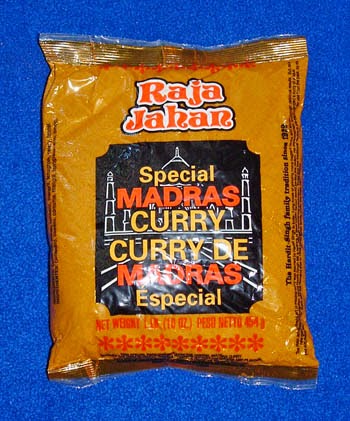
Today there are numerous brands and blends of curries each having its own distinctive flavour, from brand to brand and from country to country. Here in Trinidad, there are several blends made by a number of companies (the subject of an upcoming post) such as Chief Brand Products Limited and Chatak Food Products.
It should be noted here that the correct term used for what we westerners refer to as curry is 'masala' which means a mix or blend of spices. But what exactly makes up a basic curry?

Various curries
Cumin
WHAT'S IN IT?

Turmeric
There are just four basic spices, the ratios of which can be adjusted to taste, and which also can be modified by the addition of other spices. So here we go. The basic mixture is made up of the following:


1 tsp Turmeric powder
1 tsp Coriander powder
1 tsp Cumin powder
1 tsp Chilli powder


WHERE TO GET THE SPICES
All of these spices are available in Trinidad at the Little Store Ltd., Rapsey Street, Curepe, Trinidad.
Phone: 1-868-663-7852/662-4415.

It is important to note that once these are blended before cooking, the flavour is exquisite. In addition, purchasing one pound of each spice is actually cheaper than 4 pounds of the local blends.

So there are advantages to keeping spices separately in air tight jars until needed; both on your taste buds and your pocket.


CHICKEN CURRY RECIPE
Here is a recipe for curry chicken that you can try and I promise you will have reservations about going back to commercially blended curry especially when you have the power to make each and every curry a unique and rewarding experience that will be the envy of your friends.

This dish requires about 1 hour of preparation and will require the following INGREDIENTS:

6 tbsp oil
1 small onion chopped
1/2 tsp turmeric powder
1 tsp coriander powder
Chillies
1 tsp cumin powder
1 tsp chilli powder 
2 tbsp water
1 small chicken (jointed)
1 lb tomatoes chopped
   salt to taste
1 teaspoon coriander seeds
4 - 6 cloves garlic chopped
4 or 5 green chillies 
(or Trini pepper to taste)


METHOD:

Coriander

  1. Heat oil in a heavy saucepan
  2. Add onions and fry till transparent
  3. Mix cumin, chilli, coriander and turmeric powders with the water
  4. Add to onions in pan and stir until liquid has dried (do not burn spices)
  5. Add chicken and fry on all sides (about 3 minutes)
  6. Add tomatoes and salt 
  7. Cover and cook for 10 minutes
  8. Add water if necessary and cook till tender or until most of the juices have evaporated
  9. Add the coriander seeds and garlic and cook till juices have evaporated
  10. Continue to cook until the chicken is well glazed.
SERVES 4 TO 6 

This recipe even though it was adapted from 'Indian Cookbook by Zuju Shareef & Tim Luxton', still represents a mild and less adventurous dish which can be considered as the first step to entering the world of exotic spices (coming in another post). 

I look forward to your posts after having tried the recipe.

Chicken Curry


ENJOY!!!!!!!!!!!!!!!


Next post: From Here to There - modifying this chicken curry recipe for a truly Eastern experience.


Other related sites:
http://www.farmstarliving.com/az/?letter=t&item=turmeric+
http://www.silkroadspices.ca/products/coriander
http://www.silkroadspices.ca/products/cumin
http://www.currycapitalofbritain.org.uk/more-cities-than-ever-compete/
http://www.channel4.com/4homes/how-to/cleaning/how-to-remove-curry-08-10-08


The Mystery of Spice

Spices are an integral part of our daily lives. We use it our foods, drinks, perfumes and to some extent the medication that we take. When comes to food and drinks, endless variations and combinations exist to tantalise and tease the taste-buds taking one on a virtual journey across the globe.


 Spices over the centuries have traveled and taken prominence in various countries leading to the distinctive culinary tastes which have become a marker of that country's culture. Cardamom for example, has been associated with Indian cuisine that it has found its way on one of its stamps.

I was always fascinated by exotic foods and have searched for books on the subject. Like all westerners, I too was not receptive to the taste of these foods, but curiosity however, got the better of me and I sought out these new culinary adventures. Today, I live always seeking out new tastes and flavours that have come to represent and identify various cultures of the world. Centre stage to all of this are spices; those that are typical to a country and the way they are combined.

Tandoori Chicken

The purpose of this blog is to highlight the various uses of spices, it also seeks to:

  • help the average Trinbagonian transition from the curries that they know to the exotic flavours of India;
  • explore new and  innovative uses of spices
  • highlight other traditional uses of spices including home remedies 
  • invite contributions and comments on your own experiences and explore and other areas of interest that you may have.

So I invite you to take that journey with me and let your taste buds dance in ecstacy!

Until next time.