Sunday, 27 July 2014

Desert: Carrot Halwa

So far we have looked at the use of spices in the preparation of food. Spices, particularly the aromatics are also used in the preparation of deserts, and in India, that means a whole range of delicious creations.One of the first dishes that actually wowed me to point where I wanted to learn the recipe was Gajar ka Halwa or Carrot Halwa. With Eid-ul-Fitr around the corner I thought that this dish would make a good addition to the range of sweets prepared on the day. 

CARROT HALWA

Carrot Halwa  (http://whatscookingmom.in)

INGREDIENTS:

1kg carrots finely grated
1 liter milk
3/4 cup sugar
2 tbsp Ghee
1/2 tsp cardamom powder
3 - 4 tbsp cashews, pistachios and raisins


METHOD:
  1. Bring milk to boil (in non stick pan)
  2. Add carrots and cook on low heat till tender and milk is absorbed
  3. Add sugar and cardamom powder continuously stirring until thickened
  4. Add ghee, cashews, pistachios and raisins and cook for another 2 minutes.

SERVE HOT OR COLD!

With the popularity of premixed spices coming out of India, Shan brand has simplified the preparation of this dish by introducing a boxed spice mix. I have not seen this in Trinidad, but if you do; TRY IT!!!!!!


While there are many variations of the carrot halwa recipe, I have found that this recipe that I found on http://whatscookingmom.in/gajar-ka-halwa/ to be very simple to prepare. In addition I want to recommend the coconut ladoo recipe along with the many others listed on the site.


Let me know how you fared with this recipe. 

Until next time.


Friday, 25 July 2014

Building up your Spice collection

Up to this point we have been introducing spices, and looking their application in both local and Indian cuisines. Understanding these and their combinations would help the average Trinidadian seeking to experience the flavours of India slowly transition to minimise a culture shock.


Of course, I personally found these foods to be quite overwhelming at one point, but having the craving (also being adventurous) for them kept me focused on seeking out the multiplicity of flavours. Even now after 30 years, I still try to find new and unique foods to sample. India is so vast that each State has its own culture and  its own cuisines. It therefore means that we can in later posts examine various samplings from throughout the region since spices and its combinations are unique to the various regions.


The recipes thus far, such as the Tandoori chicken and Chicken Tikka belong the period of the Moghul Emperors and is referred to as Mughlai cooking. Here the usage of highly aromatic spices and yogurt is widely used. In other States there is less usage of the aromatic spices and greater preference for more earthy flavours such as from cumin, fennel, coriander etc.


GET A COFFEE GRINDER

A good investment for your kitchen would be a coffee grinder. Why? spice can be purchased whole and only ground when needed. Powdered spices loose their aroma within a short period; as short as 6 months. I found a very affordable coffee grinder by Proctor Silex.

Coffee Grinder


SPICE STARTER PACK

As we move forward, let's start building the collection of spices. Don't worry, this is just the first list. Try to get the whole spices; I generally buy both powders and whole seed versions. I am including also the Indian names, so here's your starter pack:


Whole and ground Spices
Cumin (jeera)
Coriander (dhania)
Turmeric powder (haldi)
Chilli powder (mirchi)
Dried red chillies
Fenugreek (methi)
Mustard (sarso)
Ajwain
Fennel (saunf)
Cloves (lawang)
Cinnamon (dal chini)
Cardamom (ilaichi)
Black peppercorns (kali mirchi)
Onion seeds (kalonji)
Curry leaves 


REMEMBER TO KEEP ALL SPICES IN AIR TIGHT CONTAINERS IN A COOL AND DRY PLACE!

All spices can purchased from the Little Store Ltd., Curepe.

Until next time. Let me know how your the outcome of your spice hunting!


Wednesday, 23 July 2014

Using Indian commercial Masala Mixes

As I reflect on how the last post ended, I realise that we Trinis are very adventurous people especially when it comes to food.


A Story: Buying Doubles.......

Food choices are reflective of a people regardless of race or religion and I now know, age. I was buying doubles this week when a young lady came out of vehicle and placed an order at the same time. I, along with others, was most surprised when the back door of the vehicle opened and a voice shouted "put pepper, I want pepper!" I looked back immediately and was even more shocked to see that it was a young girl no more than 5 years old. 


Diving in the deep end!

With that in mind I decided to dive right into using Indian spice mixes and to show how simple it is to use regardless of the fact that mix itself is complicated. What I find unique about these masala-s (mixes) is that the user has to add fresh spices as well which makes the taste so fresh that it is difficult to believe that you're using a prepackaged product.

The dish of choice is Chicken Tikka. For the vegetarians, I will substitute paneer to make Paneer Tikka.


MAKING PANEER (COTTAGE CHEESE)

Ingredients:

1/2 gallon milk
1/4 cup lemon jiuce or vinegar
1/4 tsp salt

Method:
  1. Heat the milk gently bringing to boil
  2. Add lemon juice or vinegar stirring until it has curdled.
  3. Remove from heat
  4. Let stand until it has fully curdled (add a tsp lemon juice if needed)
  5. Strain into a cheese cloth 
  6. Gently pull the ends of the cloth together and squeeze to remove excess whey.
  7. Open cloth and add salt and again squeeze.
  8. Transfer to a colander still in the cloth and place a heavy object on it to further press out the whey.
  9. Leave for 1 hour.
  10. When cloth is removed, you have cottage cheese with a firm texture.
  11. Cut into cubes (large for this recipe).

From here on the instructions are the same: just replace the chicken in the recipe with Paneer.

Chicken Tikka


CHICKEN TIKKA (also PANEER TIKKA)


Ingredients:

I box Shan Tikka Masala
2 kgs Chicken jointed and skinless
1 tbsp garlic paste
1 tbsp ginger paste
8 tbsp lemon juice
75g ghee
(1 kg. paneer cubed, carrots, sweet peppers or veggies of choice and skewers)

Method:
  1. Mix all ingredients together except the ghee.(paneer but not the veggies)
  2. Marinade for 1 -2 hours
  3. Setup the skewers with the veggies and the paneer
  4. From here place chicken and/or skewered paneer on a grill and cook till golden and tender.
  5. Brush with ghee during cooking.
  6. Chicken can also be prepared on skewers.


Paneer Tikka


I know you will enjoy these recipes. Try both even if you're not vegetarian; delicious!!

Feel free to post any comments or suggestions.


Tuesday, 22 July 2014

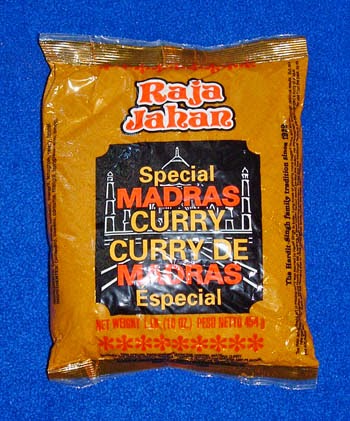
Let's Compare Curry Powders: Local vs India

By now you might be wondering why foods (curries) from India tastes so vastly different to those from Trinidad.

So far we have looked at spices and blends, and a number of recipes introduced gradually to help the average seeker of exotic tastes comfortably transition to typical Indian culinary delights.

Let's examine the basic commercial curry sold in India, keeping in mind that there are several companies each with their own twists, then do the same for Trinidad, and again the same situation.


CURRY FROM TRINIDAD


Ingredients:
Coriander
Cumin
Turmeric
Chillies
Fenugreek
Black cumin
Anise


CURRY FROM INDIA


Ingredients:
Red Chilli, Salt, Papain, Turmeric
Star Aniseed, Coriander, Cinnamon, 
Cumin, Brown Cardamom, Carom, 
Black Pepper, Mace, Fenugreek Seed, Bay Leaf, Clove, Green Cardamom, 
Ginger, Citric Acid (E330), Garlic, 
Natural And Artificial Food Colours, 
Screw Pine.


THE COMPARISON

The key point to note here is the basic curry described in an earlier post can be seen in both blends, ie. Coriander, Cumin, Chilli powder and Turmeric. Trinidad has added some other spices whereas India has included these and several other highly aromatic spices such as cardamom, mace, cloves and cinnamon etc.

The message here is that by understanding the range of spices, you can gradually modify the local blends until it reflects those of India. In this way, the average Trinidadian can slowly acclimatize his palate to those foods, which is the purpose of this blog. 


THE ADVENTURE SEEKERS

For those wishing to jump in the deep end by head first at the exotic Indian spice blends, the Shan range of curries (masala-s) can be purchased at:
  •  Little Store Ltd, Curepe
  • Price Club Supermarket 
  • Massy Stores 
  • Satanand Enterprises, Chaguanas

Keep in mind that we have only just made reference to general curry powder and only one brand. Masala mixes are specific to various dishes, some of which are Tikka masala, chana masala, rogan josh, chicken masala, keema masala, biryani masala, mutton biryani masala, meat masala, butter chicken masala, amchar gosht masala, dal masala, etc. and for all of these there are variations between brands.

Until next time. May the flavour (of the spice) be with you!


Monday, 21 July 2014

Introducing other Spices

In this post I'll introduce a number of other spices that are used typically in Indian cooking and which will be used in the recipes in the coming posts.

FENUGREEK 

Also known as 'methi', this spice is used widely in Indian cooking. Both its seeds and the fresh leaves are used. The seeds are inexpensive and grows very easily, so one easily have the fresh leaves to use as seasoning, similar to chadon beni and celery.

Fenugreek (methi) seeds and leaves(http://www.bbc.co.uk/food/fenugreek)


MUSTARD

Known as 'rai' in hindi, this spice is one the pickling spices used in Indian pickles. Like the fenugreek, mustard leaves are also used but not as a seasoning instead as a type of spinach dish called 'sarso ka saag'. This dish looks and tastes very similar to 'dasheen bush bhaji' or a thick calaloo.

Mustard greens used to prepare Sarso ka Saag

The seeds are used in various dishes and also powdered to add to various spice blends. Two varieties exist; the black and yellow seeds. Oils extracted from the mustard seed is very popular for use in pickles (or amchaars).

Two varieties of mustard seeds (http://www.bbc.co.uk/food/mustard_seeds)

TIP: When next preparing the typical Fried Aloo dish for dinner, substitute pure mustard oil instead of normal vegetable oil for a fresh spin on a traditional dish. I currently use only mustard oil. Small change = big taste.

AJWAIN

Also known as 'carom', this spice reached India from the eastern Mediterranean areas. The seeds are oval shaped and resemble that of cumin.

Ajwain seeds
Used mainly in pickles, it is also used for cooking and much has been written on its health benefits. Like most of the spices mentioned up to this point, ajwain is inexpensive.


FENNEL

This is a very popular spice in India (known as 'saunf'), it is used both for cooking and for pickling. Its delicately aromatic flavour which is somewhat similar to anise, allows it to be used in confectionery. Its uses also extends to medicinal. 

Fennel seeds
Anyone who visited an Indian restaurant in India would tell you that following a meal, a small bowl of fennel mixed with sugar is placed on the table while you wait on the bill. The mixture is simply heavenly and really helps to reduce excess fullness (due to overeating) from the meal. Serving amount is usually one teaspoonful.

TIP: Try mixing the fennel seeds with brown sugar in a 1:1 ratio and serve after meals. It has a taste like a kid's candy.


WHAT DO THESE SPICES TASTE LIKE?

Right now you might be wondering what these spices taste like. Would you believe me when I say that you already have! 

Go back to the second post where I gave the basic mix for a curry. Well, those spices along with one or two more in varying proportions create several blends which are marketed in Trinidad under brands such as Chief Brand and Turban Brand curry powders. 

Have a look at the list of ingredients the next time you are at the supermarket! 

Keeping spices separately in several storage containers allow you create blends as you want at that point in time. As mentioned earlier also, the aroma and flavour is much more distinct when you blend prior to cooking as opposed to using commercial blends. This leaves the power to you to fully explore your culinary creativity. In India and as you notice with professional chefs, spices are kept individually and blended as needed. The lesson: keep your spices in separate air-tight containers!

Of course, local curry blends have a taste unique to Trinidad and Tobago and do provide some measure of convenience for newbies and 'river-lime' cooks. It therefore has etched out a place for itself in local culinary delights.


In the next post I will compare local blends with the premixed curry blends from India and Pakistan which have become extremely popular both in India and abroad.


Saturday, 19 July 2014

Hot Tempered Prawns

In this post I will now introduce a new spice: kalonji also known as onion seeds and mangraille in Trinidad. 

Here I will begin to introduce new spices while at the same time keeping the overall taste experience still manageable for the average Trinidadian and westerner. But I guarantee the following recipe is superb with a nice clean taste, not muddled by too much spices.

Kalonji seeds
Kalonji Seeds

The kalonji plants are found throughout India. It originate in Turkey and Italy but brought to Asia and cultivated. The seeds are triangular in shape, black in colour and has a strong pungent smell. 

While much has been written about its healing properties from early times to present through many University studies, its distinctive flavour that it imparts to food is the purpose of this post.


Kalonji seeds can be bought from the Little Store Ltd. in Curepe but under the name mangraille. It is an inexpensive spice that will add a million dollar flavour to your dish.

 Let's add this to an exquisite prawn dish that takes only about 25 minutes to prepare.

Dried red chillies
Hot Tempered Prawns

INGREDIENTS
1/4 tsp turmeric powder
2 tsp chilli powder
1 tsp salt
2 tbsp vinegar
1 lb prawns shelled and cleaned
3 tbsp oil
1 tsp kalonji
4 cloves garlic thinly sliced
4 dried red chillies
6 curry leaves

Hot tempered prawn


METHOD
Mix turmeric, chilli powder and salt with vinegar 
and pour mixture over prawns mixing thoroughly

Heat oil in a heavy pan and add kalonji, garlic, 
chillies, and curry leaves and remove heat.

Allow to cool

Place pan on heat, add prawns and cook on medium 
 for about 10 minutes till tender

Do not overcook..


Having tasted this dish, you are well on your way fully appreciating exotic foods of India. In the next post other new spices will be introduced.


Cauliflower in Coconut Sauce

Following up on the previous post on the use of fresh spices and curry leaves, here is a really simple recipe that is quick and easy to prepare, and is not spicy for the average person.

This without a doubt is one of my favourite dish and was well received by all who tasted it earlier this year at a family gathering.

Green Chillies
Ingredients:
1 packet coconut milk powder
1 medium cauliflower cut into small florets
4 tbsp oil or ghee
6 curry leaves
3 green chillies chopped 
1/2 tsp chilli powder
1/2 tsp turmeric powder
1/2 tsp ginger grated
1/2 tsp garlic finely crushed
salt to taste
150 ml water


Method
  1. Fry onions till transparent
  2. Add chilli powder, turmeric, ginger, garlic and curry leaves
  3. Fry for 2 mins (add small amount of water if necessary to prevent burning)
  4. Add cauliflower and saute for 2 -3 mins
  5. Add coconut milk, chopped chillies and 150 ml water
  6. Cook on low heat till tender and sauce is thick (oil should float)
SERVES 4

Enjoy!!!!!

Cauliflower in Coconut Sauce


Again I would like to recommend the book 'Indian Cookbook' by Zuju Shareef and Tim Luxton. I have seen many books on the subject, but this is extremely simple, both in approach and layout.

In the next post I will introduce a new spice and another simple recipe that will be easily accepted and will prepare your taste buds for the exotics flavours in the coming posts.